Sometimes you have to get creative!
The Casting Connection
September 2025
By Capt. Scott Swartz
Q. I have been trying my hand at small streams, and I am frustrated with hanging flies in trees and bushes. Any solutions?
A. Yes; fish bigger streams. I am just kidding, but it does solve a lot of problems. Trees and bushes come with the territory of fly fishing, especially on small streams. There are some specialty casts that may help you. It is far easier to demonstrate casts than to describe them, but hopefully you will grasp the concepts to apply them on your next outing.

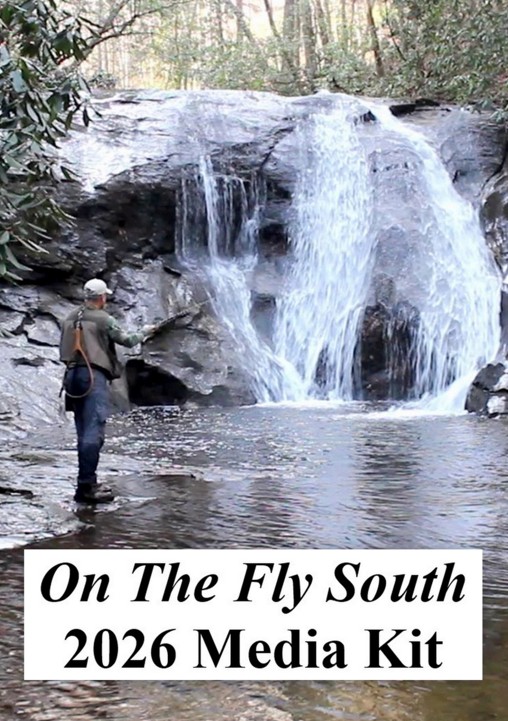
Small streams can call for some creativity to get the fly on the water!
In all cases, keep your fly in the water as much as possible, and never false cast more than absolutely necessary. Preferably make just one cast to reposition your fly back upstream.
Roll Cast: In cases where you have room to raise your rod tip overhead, a roll cast can work well, eliminating a back cast altogether. The forward cast is unchanged, and there is no back cast. One of my favorite ways to use this cast is standing in the steam facing the current. As the flow brings your fly back to you, raise your rod tip keeping pace. As a loop of line forms from your tip to the water, you simply cast back upstream. Each time, drop the fly over a foot or so “fan casting” to cover all the water before making a step or two upstream to cover new water.
Trout Master Cast: Often used from stream side when there is just enough room to reach the rod tip out over the water. This small stream technique is a side arm roll cast performed by making the rod tip form a circle to throw the line.
Water Haul Cast: Another cast that allows for a side-arm, low to the water presentation, this is similar to the Trout Master Cast, but in this case allow the fly to drift past you until it is on the “dangle” downstream. The tension of the water will load your rod, allowing for a cast back upstream.
Underhand Cast: A side arm cast, but this ends by raising the rod tip slightly at the very end of the forward stroke. Lifting the tip as the loop is forming allows the loop to form upside down with the fly line leg of the loop unrolling from the bottom, rather than from over the top.
Bow and Arrow Cast: This technique is for dense foliage streams where there is no room to cast in any conventional manner. Hold the fly in your line hand by the bend of the hook. Push the rod hand forward and pull the line hand back bending the rod like a bow. Be careful to hold the fly safely as you release it.
Galway Cast / Reverse Cast: This cast is used to make a very accurate back cast into a small opening. We have all been there. You see there is room to make a back cast, but it has to be perfect or you are going to hang a tree. Rather than making a back cast into the opening, turn your body half way around, turn your wrist around to face the opening, and make a forward cast instead. As the “back cast” is unrolling into the opening, turn to face the target, and turn your thumb 180 degrees back facing the target. Make a forward cast. This is really two forward casts made by turning your body and wrist.
There are many ways to cast in small streams, and sometimes we just have to be creative. Hopefully, this handful of casts will help you catch more fish and fewer bushes.
Send your casting questions to: Scott@AtlantaFlyFishingSchool.com