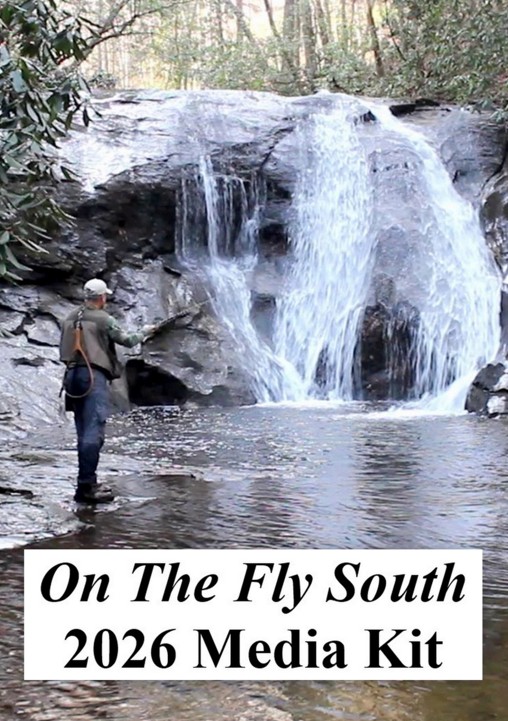
Cohutta Wilderness Area, Georgia
_________________________________________________________________________
Sponsored by

_________________________________________________________________________
On The Fly Freshwater
September 2026
Article and photos by Jimmy Jacobs.
One of the adages of cold-water fishing is that trout don’t live in ugly places. As with most things in life, there is a counterpoint to that observation. Those breath-taking places where trout do live often are located well off the beaten path. Just getting to them can be an adventure in itself.
That is much the case with the Jacks River in northwest Georgia. For fifteen miles this stream courses through the 36,977-acre Cohutta Wilderness Area. That federally-mandated roadless tract, which is the second largest in Georgia, lies within the state’s 95,000-acre Cohutta Wildlife Management Area. The best fishing area on the Jacks River is in a region that is as remote as can be found in the state.
Access to the wild trout water is available only via hiking trails that range from 3 to 8 miles long. The terrain of the Cohutta Mountains through which the river runs assures that trekking to the river will be an ordeal as well. The river bottom lies at roughly 1,500 feet of elevation, while the surrounding peaks rise as high as 4,000 feet. Most of the trails begin on the mountain ridges to enter the Jacks River valley. That, of course, means one has to hike uphill after fishing.
Besides providing a grand tableau as a backdrop for the fishing, this wilderness river produces some of the bestOne of the adages of cold-water fishing is that trout don’t live in ugly places. As with most things in life, there is a counterpoint to that observation. Those breath-taking places where trout do live often are located well off the beaten path. Just getting to them can be an adventure in itself.
That is much the case with the Jacks River in northwest Georgia. For fifteen miles this stream courses through the 36,977-acre Cohutta Wilderness Area. That federally-mandated roadless tract, which is the second largest in Georgia, lies within the state’s 95,000-acre Cohutta Wildlife Management Area. The best fishing area on the Jacks River is in a region that is as remote as can be found in the state.

Rainbows on the Jacks tend to run a bit bigger than on other Peach State wild streams.
Access to the wild trout water is available only via hiking trails that range from 3 to 8 miles long. The terrain of the Cohutta Mountains through which the river runs assures that trekking to the river will be an ordeal as well. The river bottom lies at roughly 1,500 feet of elevation, while the surrounding peaks rise as high as 4,000 feet. Most of the trails begin on the mountain ridges to enter the Jacks River valley. That, of course, means one has to hike uphill after fishing.
Besides providing a grand tableau as a backdrop for the fishing, this wilderness river produces some of the best wild trout action in the southeast. Rainbows of 9 to 14 inches turn up regularly from this flow, with some larger browns also appearing in the mix.
As to whether these are truly wild fish, history speaks to the point. The last time the upper river was stocked was during restoration efforts back in the 1960s. You find no clipped fins or bland coloring on this stream. Back in the early part of the 20th century, the Jacks River was a bit less remote. The Conasauga Lumber Company built logging camps along its narrow gauge rail line that snaked back into the mountain valleys. Those tracks were used to haul out poplar logs with widths up to 11 feet. The old crossties are still visible in the rail beds that now host hiking trails. Such crossties can be seen along the Jacks River Trail in the vicinity of Beech Bottom today.
Anglers heading into the Jacks River might be put off by the number of hikers and campers encountered along the way. The natural assumption is the heavy use translates to plenty of fishing pressure. While a lot of those campers take a fishing rod along, the “serious” angling pressure is quite low. Many of those campers toss a hook baited with corn into the pool beside their campground, and mostly with little to show for it. The wild trout of the Jacks River exhibit a decided distain for such offerings.
Fishermen who present imitations of the natural foods with which the rainbows and browns are familiar stand a much better chance of hooking up. While the Jacks is relatively infertile like most mountain freestone streams, to some extent its size makes up for the lack of nutrients. With more water and bottom surface, the amount of food is more plentiful than in smaller mountain flows.
While many mountain streams are populated mostly with 6- to 8-inch wild fish, the Jacks sustains a population filled with 9- to 12-inchers. The bulk of these are rainbows, but browns also are present.

There is plenty of room for fly casting on the Jacks River.
During the summer months the best bet is to toss a dry-and-dropper rig into the river. The dry should be an attractor pattern in the size twelve to fourteen range. Royal Wulffs, Royal Trudes, Humpies, or Irresistibles are all good choices, as are hopper and other terrestrial patterns. Even with these larger sizes, expect to get hits on the surface.
On lesser fished wild streams, having a large, bushy fly that looks “buggy” drift overhead can be too much of a temptation for the trout. The lack of natural food makes that fly look like a Honey Baked ham to the fish and provokes a reaction strike.
Dropper patterns run the gamut, but in the summer months, smaller is usually better. Again, you most often are not trying to “match a hatch” here. While the Jacks has plenty of bug life, it is a smorgasbord. Nothing generally dominates the dinner table for the fish.
Some patterns that have worked regularly are Flash-back Hare’s Ears, Pheasant Tails, Prince Nymphs, and red Copper Johns.
When the water is low and clear in the summer, you have to work harder to fool trout that are in the larger pools on the river. It is necessary to get the offering down to the bottom. Fish holding there are less likely to see you. Another option is to concentrate on the swift water where the current is coming into the pool. The white water on the surface helps disguise your presence.
The fish you often spot suspended in the clear pools probably have known you were on the river since you topped the ridgeline hiking in! They are tough cookies to fool.
The easiest fish to catch are going to be in the potholes and runs located within the riffle areas of the river. These swifter stretches provide noise and surface distortion, both of which make it easier to approach within casting range without spooking the fish. In fact, it’s possible to get within a rods length of some of these holes in the rapids without sending the fish scurrying under a rock.

The Jacks is big water compared to most Georgia mountain streams.
The size of the river, which stretches to more than 100 feet wide in most places, provides another advantage. Much of the stream is open enough to allow for longer casts of up to 30 to 40 feet. If you can manage your line to provide natural drifts from that distance, your odds of hooking up improve markedly.
The best area of the river for trout fishing stretches from the mouth of Bear Branch, where the Jacks River Trail first joins the upper portion of the river, downstream to the Jacks River Falls at Beech Bottom. This run offers roughly 6 miles of water. Above Bear Branch the river is smaller, often only thirty feet wide or so. Downstream of the falls, trout are still present and the pools are quite big. But the water down there begins warming in summer, and the native Coosa River redeye bass become more prevalent in the stream. Still, the area below the falls is likely to turn up the largest trout in the river.

The Jacks River Falls.
The easiest route for reaching the best trout water is via the Beech Bottom Trail. It runs for 3 miles, beginning in Tennessee on Big Frog Road and crossing the state border before reaching the river just above the Jacks River Falls. That cascade is composed of a 10-foot drop into a natural swimming hole, then plunging over an additional 50-foot drop. During times of normal water flow, the falls are the most powerful found in the Georgia mountains.
Other options for getting to the best waters are to walk eight miles upstream on the Jacks River Trail from its start on Old State Route 2 at the junction with the Conasauga River, or you can make the six-mile trek on the Hemp Top and Penitentiary Branch Trails from Dally Gap. This trail requires a 3- mile uphill walk, before descending an equal distance downhill to the river.
Finally, you can start at the southern terminus of the Jacks River Trail at Dally Gap and make the 2-mile downhill hike to the river. Unfortunately, the river is quite small when you reach it, and you still need to walk a couple of miles downstream for the best fishing water.