Poetry or Fishing?
The Casting Connection
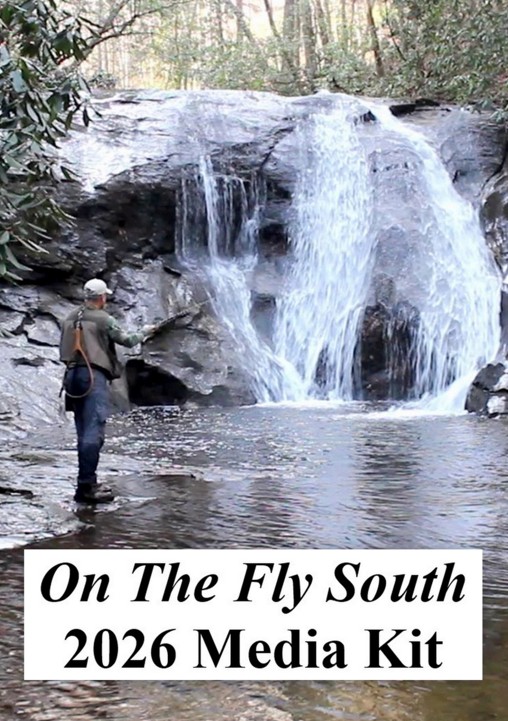
Featured photo by Polly Dean.
February 2024
By Capt. Scott Swartz
Scott Swartz founded the Atlanta Fly Fishing School, which began in 1999. It is the largest such operation in the Southeast and the only Trout Unlimited “Gold Endorsed” school in the United States. His Florida Fly Fishing Schools started in 2008, helping anglers
learn to successfully fly fish in saltwater.
False casting is the image we get when we picture someone casting a flyrod. It is a beautiful sight to see the loops unrolling forward and back, with perfect timing. The spray of water from line and fly shatter into a thousand diamonds of sunlight as they fall back to the stream. That is the poetry of our beloved sport. If you fly fish for poetry and the joy of casting then don’t change a thing…However, if there are days when you are fly fishing to actually catch fish then read on as this month’s tip is for you.
The false cast is simply a series of backward and forward casts that are made in the air. Although it is beautiful to watch, there are no fish in the air! In fact, there is an inverse relationship between false casting and fish catching, and most folks false cast way more than needed. The more time we spend false casting the less time we are presenting a fly to the fish. Also, the longer we carry line back and forth in the air, the greater the odds of bad things happening like spooking fish, hooking a tree or a bush, getting twists in our line or tying “wind-knots” in our leaders.
While false casting should be used sparingly, it has at least three distinct purposes that allow even the hardest core fisherman an opportunity to enjoy their poetic side. First, use the false cast to dry the dry fly: a couple of quick casts should expel the water from your fly allowing it to again float high.
Next, false casting is the perfect way to determine the distance to your target: you can lengthen the distance of your cast by shooting line, or shorten the distance of your cast by retrieving line before allowing your fly to land on the water. Of course, false casting a bit short of your target and shooting line out on the final casting stroke minimizes waving line overhead and spooking the fish.

Finally, use the false cast to change the direction of your cast: there are two ways to change your casting direction. One way is with an aerial change of direction. The aerial method has you false casting overhead as you turn your body toward the new target. Another way is an on-the-water change of direction. This can be a faster way to perform the change of direction cast and involves little to no false casting. To execute this change of direction, cast-sweep the rod tip very low over the water toward the new target and keep your fly and line on the water. Next, make a back cast 180 degrees away from the target, and bingo, your first forward cast is on course to the new direction.
As for me? I fly fish because I enjoy fly casting almost as much as catching fish. Sometimes I can be competitive, when fishing with friends, and those days my fly will hardly leave the water in hopes of upping my odds. I do however, enjoy fly fishing because of the element of fly casting, and I must admit there are days I’ll false cast more than necessary…some days way more than necessary. In fact, some days I just have to call it casting practice rather than fishing.